Table Of Content

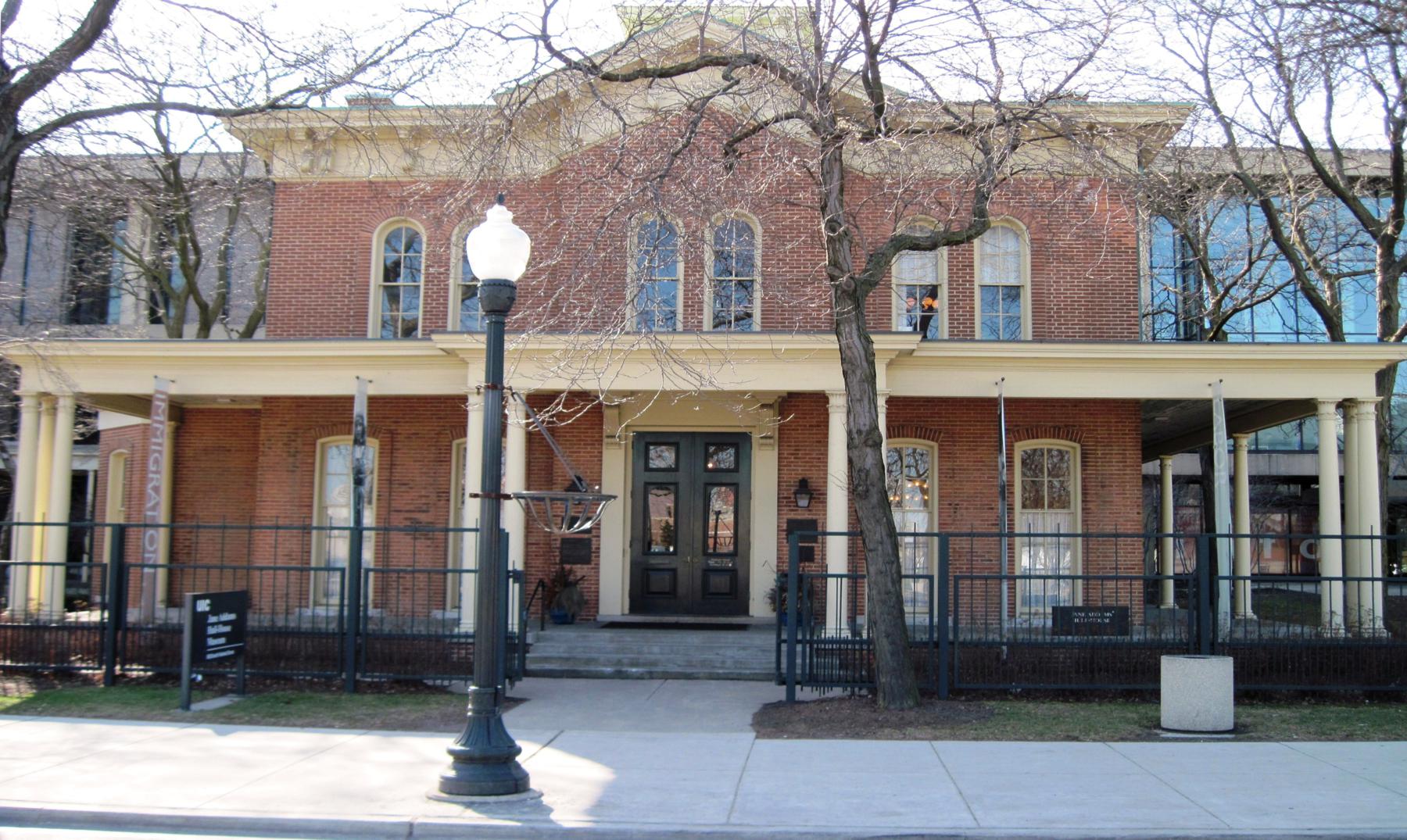
Addams believed that effective social reform required the more- and less-fortunate to get to know one another and also required research into the causes of poverty. She worked for protective legislation for children and women and advocated for labour reforms. She strove for justice for immigrants and African Americans, and she favoured women’s suffrage. The Hull-House settlement complex was demolished in 1963 to make way for the University of Illinois Chicago campus, and only two of the original 13 buildings remain. Both are designated as protected historic landmarks and now make up the Jane Addams Hull-House Museum.
Futaba Cake Building
Explore historical materials related to social reform and social welfare through the Image Portal. At its height, "Hull House" was actually a collection of buildings; only two survive today, with the rest being displaced to build the University of Illinois at Chicago campus. It is today the Jane Addams Hull-House Museum, part of the College of Architecture and the Arts of that university. Jane Addams (born September 6, 1860, Cedarville, Illinois, U.S.—died May 21, 1935, Chicago, Illinois) was an American social reformer and pacifist, co-winner (with Nicholas Murray Butler) of the Nobel Prize for Peace in 1931.
A Brief History of Scent With Saskia Wilson-Brown
The establishment of the Chicago campus of the University of Illinois in 1963 forced the Hull House Association to relocate its headquarters. The majority of its original buildings were demolished, but the Hull residence itself was preserved as a monument to Jane Addams. Through Where Women Made History, we are identifying, honoring, and elevating places across the country where women have changed their communities and the world. Addams and her colleagues at Hull-House were not the only critics of poverty during the Gilded Age and the Progressive era. Henry George’s 1879 denunciation of class division, Progress and Poverty, sold millions of copies worldwide. Edward Bellamy’s 1888 novel, Looking Backward, imagined Boston in the year 2000 where a benevolent government provided universal prosperity and equality.

NEW —Wild South Africa
Many volunteers were replaced with paid workers and professional staff were appointed to head each department. The settlement also made use of skilled workers supplied from the Works Progress Administration (WPA; later Works Projects Administration) and the National Youth Administration (NYA). The life of Jane Addams and evolutions of Hull House and Metropolitan Family Services are tightly linked to the social and political histories of Chicago and the United States.
Visit Hull House Through the Eyes of Hilda Satt Jane Addams: Together We Rise Chicago Stories - WTTW
Visit Hull House Through the Eyes of Hilda Satt Jane Addams: Together We Rise Chicago Stories.
Posted: Fri, 20 Oct 2023 16:53:11 GMT [source]
Over the course of its over 70 years in operation, Hull-House served disadvantaged immigrant communities in Chicago by creating public health programs and initiatives in every area imaginable—health clinics, nutrition, sanitation, childcare, and much more. At the same time, the settlement was a hub of community growth and cultural celebration. Neighbors could take citizenship or English-language classes one evening and join a dance club or the Hull-House choir the next. Hull-House was a model for other settlement houses across the U.S. and internationally in their mission to address social inequality. In 1931, Jane Addams became the first American woman to be awarded the Nobel Peace Prize, and she continued her work at Hull House until her death in 1935. She’s credited with spearheading change in the areas of public health and education, fair labor practices, free speech, and immigrants’ rights, and is still recognized today as a tireless advocate for the poor and a courageous social reformer.
Jane Addams
As an experiment in group living, Hull-House attracted male and female reformers dedicated to social service. Addams always insisted that she learned as much from the neighborhood’s residents as she taught them. The Hull-House Settlement, founded by Jane Addams and Ellen Gates Starr, was inspired by a trip to Toynbee Hall, a similar institution in London. Jane Addams wanted to create a space that sought to serve the needs of the community as was common during the “Progressive Era” in the United States. The settlement house movement, which began in the late 1800s, saw volunteers settling in poverty-stricken neighborhoods and creating social and cultural institutions to provide resources to the people living there.
Living on and off at Hull-House in the 1890s, Hamilton attempted to identify causes of typhoid and tuberculosis in the surrounding community, became an expert on lead poisoning, and went on to have an exceptional career in public health. Map compiled by residents of Hull-House depicting the nationalities of a nearby neighborhood. Addams read Leo Tolstoy’s My Religion, in which the great novelist confessed his personal failure and his commitment to Christian service and nonviolence, describing how he had found purpose and satisfaction living with peasants. She traveled by horse-drawn omnibus to London’s impoverished East End and visited Toynbee Hall, an English settlement house, where Oxford and Cambridge graduates lived and worked among the destitute.
Museum of Motherhood
They also delivered babies, nursed the sick, prepared the dead for burial, and, from time to time, sheltered young women from abuse. With Starr, Addams rented the Charles Hull mansion in an impoverished Chicago neighborhood and Hull House opened its doors on September 18, 1889. Addams and Hull House led the progressive charge in Chicago and in the United States. The work of Hull House resulted in numerous labor union organizations, a labor museum, tenement codes, factory laws, child labor laws, adult education courses, cultural exchange groups, and the collection of neighborhood demographic data. In the preface of Hull-House Maps and Papers, she mentioned that the residents of the settlement house typically didn't engage in sociological inquiries, which she distinguished from investigations into labor abuses or factory conditions.
Review: "Contemporary Ex-Votos" is about devotion, then and now - Chicago Tribune
Review: "Contemporary Ex-Votos" is about devotion, then and now.
Posted: Thu, 22 Feb 2024 08:00:00 GMT [source]
Jane Addams lived from 1860 to 1935, from the Civil War to the Great Depression. She was a social justice progressive urging Americans to become more equal, cooperative, peaceful, and kind. Instead of giving in to neurasthenia, she traveled from Cedarville to Chicago intent on improving the lives of the immigrant poor. She urged Americans to consider the factory workers who endured long hours with low wages—and to pay attention to the children who, instead of being at work, should have been in school.
When these efforts were ineffective, they filed suit in state and federal courts, finally losing their appeal in the Illinois and U.S. The ethnic composition of the neighborhood changed after World War I, as immigration quotas cut off the flow of European immigrants to the U.S. In the 1920s, Mexicans began to move into the area south of the settlement and later, African Americans moved to the south and west. Addams, a pacifist, spent increasing amounts of time away from the settlement traveling to promote her ideals. She was a founding member of the Women's International League for Peace and Freedom and in 1931, received the Nobel Peace Prize.
Giving speeches and writing 11 books and hundreds of essays, editorials, and columns, Addams grew famous. Hull-House became a symbol of progressivism, the reform movement that flourished between 1890 and 1920 as it tried to better a country battered by industrialization, the explosive growth of cities, and the sudden arrival of millions of immigrants, mostly poor. Social reformer Jane Addams and close friend Ellen Gates Starr founded Hull-House, Chicago’s first settlement house, in the Near West Side in 1889. “Residents,” progressive-minded men and women often from comfortable backgrounds, settled at Hull-House and assisted in the many programs offered. Hull House was truly a safe haven, where immigrants could find a sense of community. Hull House was the second settlement house to open in the United States, and of the hundreds of similar settlements opened around the country at the time, it was by far the most famous, most influential, and most innovative.
He was an abolitionist, a Quaker, and a friend of Abraham Lincoln, whose photographs hung in his parlor and study. Jane revered her father, characterizing him as “a man who held converse with great minds.” He introduced her to books, such as Thomas Carlyle’s On Heroes and Hero Worship, and insisted on the best education for his children. Today, interest in Jane Addams is keen, and her reputation is in ascent. Scholars have published three volumes of The Selected Papers of Jane Addams, with more volumes to follow.
After attending a bullfight in Spain in 1888 with a close friend, Ellen Gates Starr, Addams confided her dream that together they would plant a replica of Toynbee Hall amid the tenements of Chicago. Not always serious and priggish, Jane could also be irreverent, even naughty. In her autobiography, she confesses that she and some classmates at the seminary read Confessions of an English Opium-Eater by Thomas De Quincey and even went so far as to imitate the author. Hoping to understand De Quincey’s dreams more deeply, Jane and her friends drugged themselves with opium during a long holiday.
Mesmerized by Tolstoy, she visited him in Russia in 1896 and became a lifelong pacifist. Tolstoy, who had hundreds of visitors over the years, seemed unaware of her Chicago fame and chided her fashionable leg o’ mutton sleeves, which he found decadent. He also suggested she sell her real estate and work in the Hull-House bakery. Addams was friendly with and consulted by progressive presidents Theodore Roosevelt and Woodrow Wilson, who supported regulating corporations, protecting consumers, improving the environment, and legitimizing unions. Alice Hamilton fulfilled Jane Addams’s dream by graduating, in 1893, from the University of Michigan’s medical school.




No comments:
Post a Comment